
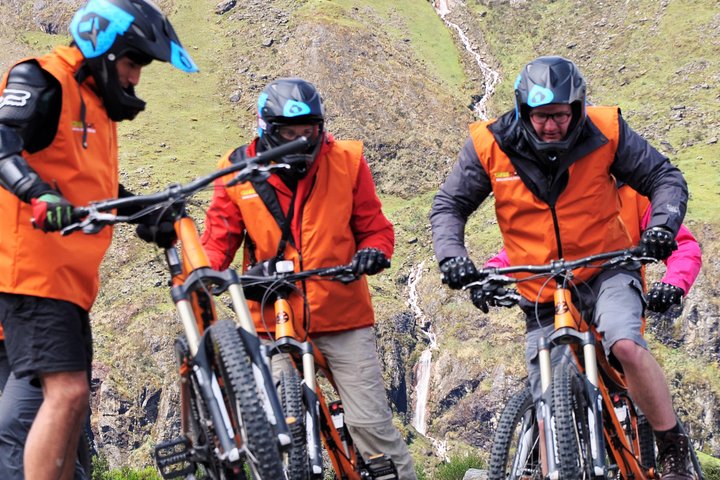
Pedal, Paddle, and Fly: The Inca Jungle’s 4-Day Rush to Machu Picchu
A four-day mashup of downhill biking, whitewater, and cloud-forest trekking that finishes at Machu Picchu.
The morning fog lifts off Abra Malaga like a curtain being pulled back on a theater of cloud and stone. At 4,300 meters the air is thin and bright; the first gear clunks into place and the group leans forward. Gravity is the protagonist: a stitched ribbon of switchbacks, dirt, and old Inca roads unspools below, daring you to trade altitude for velocity. By the time the valley opens and the forest thickens, you’ve traded the alpine cold for green heat, river-song and the humid scent of orchids. This is the Inca Jungle Trek—four days that stitch biking, ziplining, whitewater, and hiking into a single, relentless corridor toward Machu Picchu.
Trail Wisdom
Acclimatize in Cusco
Spend 48–72 hours in Cusco before the trek to reduce altitude sickness risk—drink lots of water and avoid heavy exertion the first day.
Bring layered clothing
Temperatures change dramatically from Abra Malaga to the jungle—pack breathable layers and a lightweight rain shell.
Secure your bike fit
Make sure the operator fits your bike to you before you descend and insist on a helmet and knee pads if you prefer extra protection.
Buy Machu Picchu tickets early
Entrance and train tickets sell out—book your Machu Picchu ticket and train seat well in advance, especially May–September.
Local Knowledge
Hidden Gems
- •Thermal baths in Aguas Calientes—perfect after the final hike
- •Small family-run coffee farms near Santa María that offer short tastings
Wildlife
Andean condor, Hummingbirds
Conservation Note
Operators increasingly follow leave-no-trace practices; support guides and lodges that pay local employees fair wages and avoid single-use plastics.
The route intersects old Inca roads and passes near lesser-known ruins; Machu Picchu itself was brought to wide attention in 1911 by Hiram Bingham.
Seasonal Guide
spring
Best for: Fewer crowds in Cusco, Cool mornings for biking
Challenges: Occasional rain at lower elevations, Variable temperatures
Spring (Sept–Nov locally) brings warming days and fewer visitors; expect wet microbursts in the cloud forest.
summer
Best for: Warm lower-elevation weather, Lush cloud forest scenery
Challenges: Peak tourist season in southern hemisphere winter months is May–Sept causing crowds, Higher lodgings prices
The dry season (May–September) offers the most stable weather for biking and clear views at Machu Picchu but also more tourists.
fall
Best for: Color and light for photography, Quieter trails after peak season
Challenges: Variable afternoon storms, Cool nights
Autumn months can be crisp and clear in mornings with potential for afternoon rain at mid-elevations.
winter
Best for: Lower river levels for easier rafting, Fewer tourists in low season
Challenges: Colder nights at high elevation, Some services reduced in off-season
Peru’s wet season (roughly Dec–Mar) brings heavier rain lower down—expect muddier trails and occasional cancellations.
Photographer's Notes
What to Bring
Helmet and glovesEssential
Protects against falls on mixed-surface descents and keeps hands comfortable on long rides.
Lightweight rain shellEssential
Cloud-forest showers can be sudden; a breathable rain jacket keeps you dry without overheating.
Hydration system (2–3L)Essential
Keeps water accessible during long descents and hot valley stages where dehydration is a risk.
Sturdy trekking shoes with good gripEssential
Necessary for the final trek sections and wet, rocky trails into Aguas Calientes.
Common Questions
Do I need previous biking experience?
You should be comfortable descending on gravel and dirt; guides can accommodate beginners but riders must control speed and braking on steep switchbacks.
Is altitude a major concern?
Yes—starting near 4,300 m means acclimatization in Cusco is highly recommended to minimize symptoms like headache and fatigue.
Will the tour organizer handle Machu Picchu tickets and trains?
Most premium operators coordinate Machu Picchu entrance and train logistics—confirm this at booking and get written confirmation of tickets included.
How strenuous is the rafting section?
Typically Class II–III depending on water levels; it’s suitable for novice rafters with an experienced guide but requires basic swimming comfort.
What type of accommodations are used on the trek?
Expect basic guesthouses or eco-lodges—clean and comfortable but more utilitarian than luxury hotels, designed to support active groups.
Can I leave luggage behind while doing the trek?
Yes—operators arrange for heavy luggage to remain in Cusco or be transferred; bring a small daypack for essentials on the route.
What to Pack
Helmet and gloves for safety; hydration bladder (2–3L) for hot valley days; layered moisture-wicking clothing for big temperature swings; lightweight rain jacket to handle cloud-forest showers
Did You Know
Machu Picchu remained largely unknown to the wider world until American explorer Hiram Bingham brought international attention to the site in 1911.
Quick Travel Tips
Acclimatize in Cusco for 48–72 hours; reserve Machu Picchu and train tickets months ahead; carry local currency for village purchases; confirm gear standards with your operator before departure
Local Flavor
After the trek, head to Aguas Calientes for grilled trout by the river and a soak in the local thermal baths; back in Cusco try ceviche or alpaca at Cicciolina or Chicha by Gastón Acurio and wash it down with a Cusqueña beer while browsing the San Pedro Market.
Logistics Snapshot
Closest airport: Alejandro Velasco Astete International Airport (CUZ). Driving time to trailhead: 2–3 hours from Cusco (75–90 km). Cell service: intermittent outside towns, unpredictable in valleys. Permits: Machu Picchu tickets and train reservations required; tour operator typically coordinates these.
Sustainability Note
Pack out all trash, avoid single-use plastics, stick to established trails, and choose operators that reinvest in local communities to keep cultural and natural resources intact.
Continue Reading

Above the Gorge: Ziplining Glerárgil Through Akureyri’s Hidden River Canyon
Clip in over a river that cleaves a town: ziplining the Glerárgil canyon in Akureyri is an urban alpine rush—short, scenic, and rooted in place. Read on for why it’s one of Iceland’s most accessible aerial adventures and how to plan your visit.
Akureyri, Northeast

One Wild Day in the Taurus: Rafting and Ziplines Through Tazı Canyon
Spend a day in the Taurus Mountains rafting 12 km through a limestone gorge and flying high over the same walls by zipline. It’s a compact, beginner-friendly adventure that pairs river adrenaline with aerial perspective.
Side, Antalya Province